





We Need to Talk About Leslie Wexner Retail Brands
From 1997 to 2001, I worked for the apparel company Express. When I started, the company was called Compagnie Internationale Express. By the time I left, it was changing from Express World Brand to a dual-gender store, merging with the men's store formally known as Structure. Whatever the name was in those years, it was always part of a major company owned by Leslie Wexner.
Les Wexner was this Oz-like person when I worked for what was then called Limited Brands. From his perch in Columbus, Ohio, managers would share stories of who had met him, had visited Corporate, or had him secret shop their stores. I was never one of the managers who met Leslie Wexner, the same Wexner who is closely tied with Jeffrey Epstein.
Like many of you, I vote with my wallet and do not wish to support companies that do not align with my ethics. I know many folks are sharing what companies they are boycotting due to what has come to light in the Epstein Files, and that includes companies associated with Wexner. I have seen a lot of inaccuracies regarding what companies Wexner owns. I wanted to offer accurate and current information so you can be an informed consumer.
TL;DR
The Quick Version
- Lane Bryant isn't owned in any way by Leslie Wexner, nor is Abercrombie, New York & Company, or The Limited
- Leslie Wexner stepped down as CEO in 2020
- Wexner and his wife left the board in 2021
- Wexner sold most of his stake in Bath & Body Works and Victoria's Secret/PINK but still owns 1.8% of the shares
The History of Limited Brands
To understand all of this, we need to start with the history of The Limited. It is the start of what made Leslie Wexner a billionaire.
In 1951, Bella and Harry Wexner opened a women's clothing store named Leslie's (after their 14-year-old son) on State Street in Columbus, Ohio. Leslie spent a lot of time working in this store, and really got to understand apparel and retail business.
In 1963 at age 26, Leslie borrowed $5,000 from his aunt and $5,000 from the bank and opened a store called The Limited. He called it this because it focused on fashion for younger women, while his parent's store sold clothes for all ages. The Limited proved so successful, a year later Wexner's parents closed Leslie's and joined their son in his new fashion venture. Four years later, Limited Brands went public, listed on the NYSE as LTD.
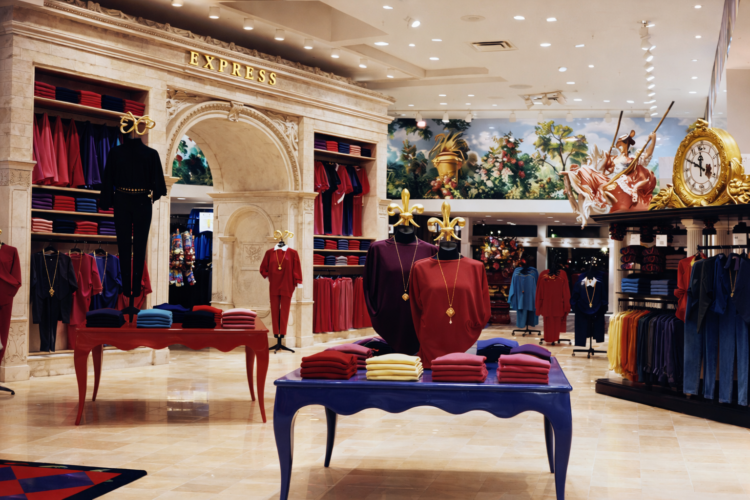
In the 80s, Wexner began building out Limited Brands. In 1980 he opened the first Limited Express store in Chicago, offering a more colorful and trendy fashion with a French-themed decor. It did so well, he brought Michael Weiss on and opened eight more stores, dropping Limited from the name and just calling them Express. At this time, Wexner also tested selling men's apparel. This did so well, in 1989, he created a spin-off store for menswear called Structure.
Around this time is when Jeffrey Epstein and Leslie Wexner met through Robert Meister, a mutual friend. Epstein left Bear Stearns in 1981 to start his own business managing the finances of billionaires. Around 1986, Epstein took on Wexner as a client and many say this partnership is what “made” Epstein. By 1989, Wexner and Epstein were so close that Wexner, through a trust, bought the town house Epstein lived in. (source: Vanity Fair)
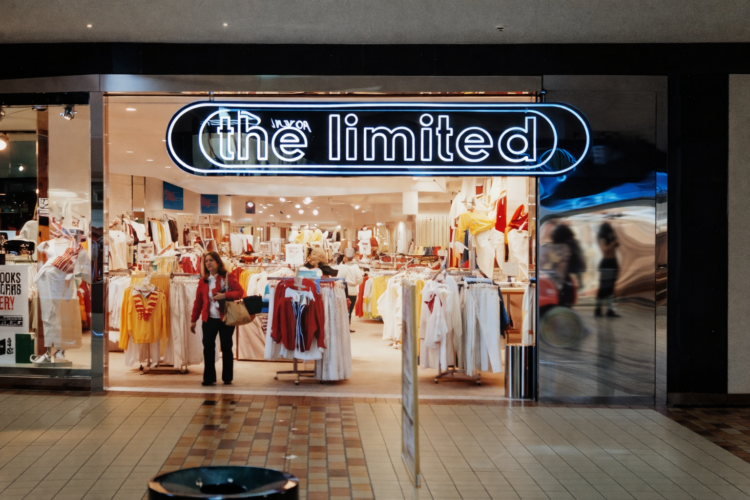
The Limited continued to do incredibly well. I can remember that when I was in middle school, there was no cooler place to shop and every girl just HAD to have a Forenza roll-neck sweater and an Outback Red henley shirt from the boutique.
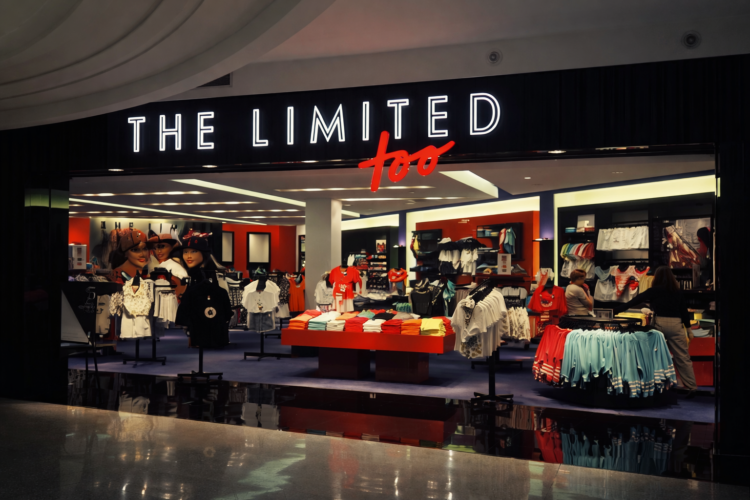
In 1987 Wexner opened Limited Too, as an infants, toddlers and younger girls' version of The Limited. In 1996, the focus switched to tweens. In 1999, Limited Too became a separate company called TOO, Inc. While there is no proper documentation of it, according to internal documents, in 2001, Wexner transferred TOO, Inc. to a financial trust company owned by Epstein.
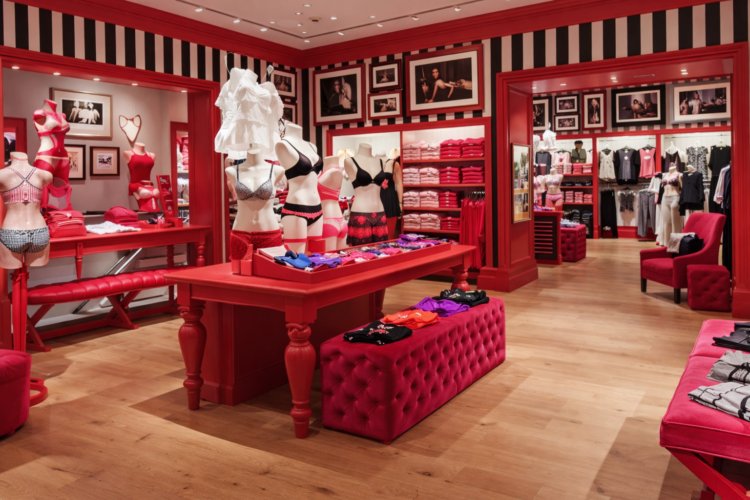
Wexner also expanded Limited Brands via acquisition. In 1982, he bought Victoria's Secret and Lane Bryant. In 1985, Les Wexner bought the department store Henri Bendel and the chain of Lerner stores, and in 1988 purchased Abercrombie & Fitch.
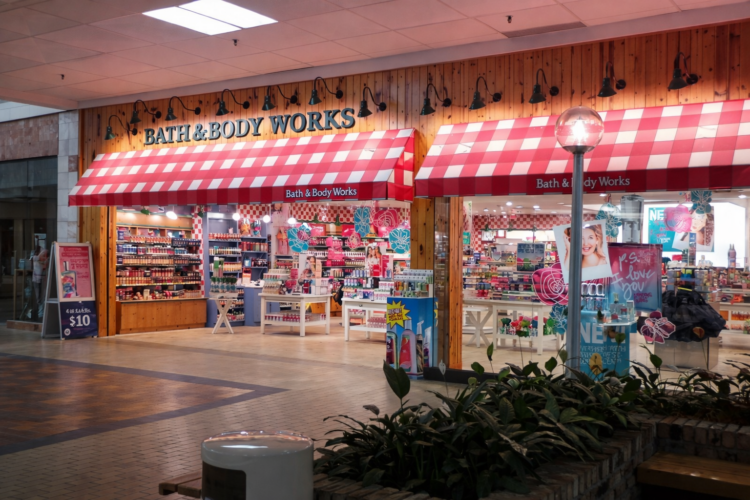
In 1990, Wexner created Bath & Body Works, which was originally the beauty line for Express. Back then, most Bath & Body Works stores were attached to an Express, as were Structure stores. In 1997, White Barn Candle Company was created as competition to Yankee Candle.
During the 90s, Wexner also created Cacique, a French-inspired boutique offering sleepwear and intimates. However, by 1998, Cacique boutiques were closed to focus on Victoria's Secret, and in 2005, the brand was merged into Lane Bryant.
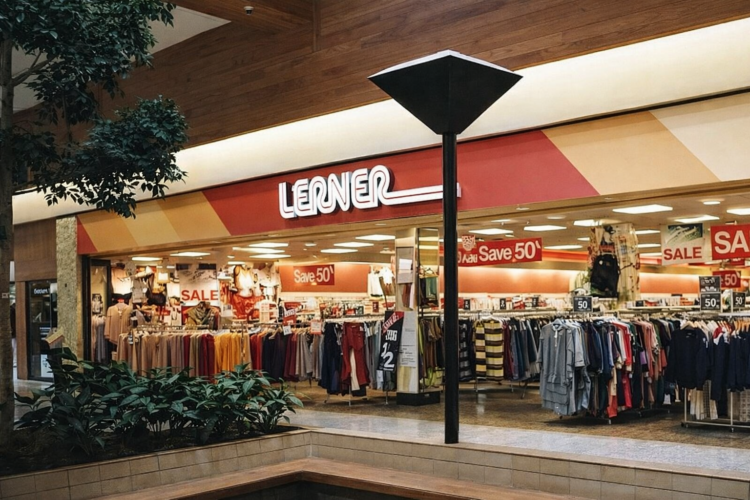
The 90s is also when Lerner became Lerner New York. By the end of the decade, many Lerner stores had been shuttered, seeing them as competition to other stores under the Limited Brand umbrella. To revitalize the brand, the chain was also renamed New York & Company.
When I worked for Express, it really was like one company, just with different aesthetics in each store. Those store cards we pushed so hard on customers could be used at any of the brands, we just weren't allowed to admit it. Sales associates got a 30% discount across Limited Brands, Managers got 40%, and four times a year we got an extra 15%.
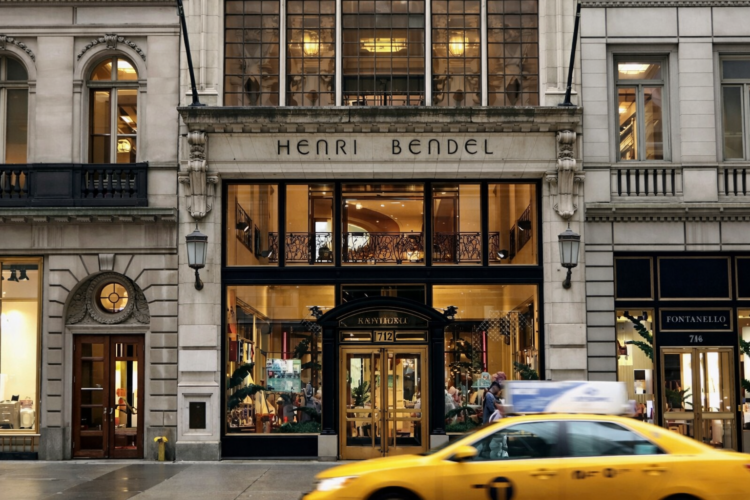
Our discount worked at any location; employees would travel to NYC to be able to use the discount at the biggest stores, as well as Bendel's. My family to this day jokes about how all the holiday gifts I'd give were from Limited Brand stores.
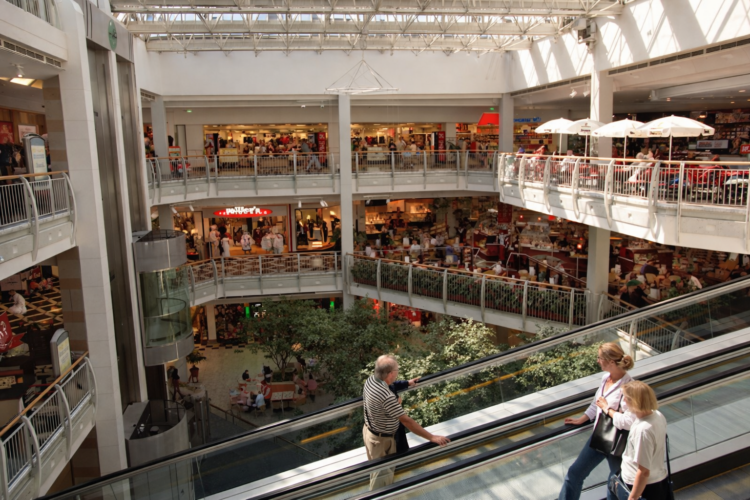
If you went into an American mall in the 90s and early Y2K, you would likely find at least two Limited Brands stores, if not all of them. But mall culture was slowing down with the onset of the internet. I didn't realize it then, but I left retail at the perfect time.
The Great Sell-off of Limited Brands
If you're GenX or an elder Millennial, you remember mall culture, and you remember all these stores. You may have known they were all connected, and you may have even known the name Les Wexner. However, you may not know that come Y2K, Wexner's company sold off many of the brands. And after 2019, Wexner began removing himself from what was left of the company:
- In 2001, Limited Brands sold Lane Bryant to Charming Shoppes, Inc. Lane Bryant was no longer owned by Les Wexner
- In 2002, Limited Brands sold New York & Company to Bear Stearns Merchant Banking. New York & Company was no longer owned by Les Wexner.
- In 2004, the first Justice store was opened, slowly transitioning the Limited Too brand. Limited Too was closed in 2008.
- In 2006, Too Inc. completed its name change to Tween Brands, Inc., and began trading on the NYSE under TWB.
- In 2007, Limited Brands bought La Senza, a Canadian intimates chain. However, it was sold to private equity firm Regent in 2018.
- In 2007, Limited Brands transferred 75% ownership of its flagship Limited chain to buyout the firm Sun Capital Partners Inc.
- In 2007, this is supposedly when Epstein stopped managing Wexler's personal finances. (source: New York Times, gift link)
- In 2010, the remaining shares of The Limited were sold to Sun Capital Partners Inc. The Limited was no longer owned by Les Wexner.
- In 2013, Limited Brands changed its name to L Brands to account for no longer having Limited stores. The ticker with the NYSE changed from LTD to LB.
- In 2014, Sycamore Partners bought a 10% interest in Express.
- In 2017, Sycamore Partners purchased The Limited; the label is now exclusively sold at Belk.
- In 2019, the sole Henri Bendel store closed and the website shuttered.
- In 2019, UpWest, a direct to consumer/fully online brand was created as a spin-off of Express.
- In 2019, Jeffrey Epstein was charged with trafficking of minors. This is also the year of his death.
- In 2020, Leslie Wexner stepped down as CEO.
- In 2020, Justice filed for bankruptcy and all stores closed by 2021.
- In 2021, L Brands separated Victoria’s Secret into an independent, public company through a tax-free spin-off to L Brands shareholders. The new company encompasses Victoria's Secret and PINK.
- In 2021, Les Wexner, and his wife officially and completely exited the board of Directors of L Brands. This same year, the Wexners sold the majority of their shares, going from owning about 12.7% of the shares to 1.8% of the shares. (source: AlchemPro)
- In 2021 after his leaving, L Brands became Bath & Body Works, Inc.
- In 2021, The Justice brand was acquired by Bluestar Alliance LLC and relaunched, with products appearing in Walmart stores.
- In 2024, Express and all of its affiliated subsidiaries declared Chapter 11 bankruptcy. Later that same year, Express was sold to PHOENIX, a joint venture led by WHP Global, SPG and Brookfield Properties.
The Relationship Between Leslie Wexner and Jeffrey Epstein
As I mentioned earlier, once Epstein met Wexner, he got very intimately involved in the billionaire's finances, as well as his life. One example that stood out to me was that in 1992, Epstein was put on the board of the Wexner Foundation in place of Wexner’s ailing mother. When Wexner's mother recovered and demanded to be reinstated, Epstein claimed they settled by splitting the foundation in two. (source: Vanity Fair)
Epstein's management of Wexner's personal finances included signing Wexner's tax returns for him, borrowing money on his behalf, he even made some of the acquisitions that grew Wexner's retail empire. In 1991, Wexner gave Epstein full power of attorney. With this power, Epstein ended up owning millions of dollars' of shares in Limited Brand stock and leadership positions in Wexner’s foundations. (source: New York Times, gift link)
In 1996, two senior executives of Victoria's Secret found out that Jeffrey Epstein was trying to pitch himself as a recruiter for Victoria’s Secret models. That same year, Epstein sexually assaulted Maria Farmer at Wexner's mansion. She fled the room to call the police, but Wexner's security refused to let her leave the mansion for 12 hours. Less than a year later, Epstein lured model Alicia Arden to his hotel room, supposedly to discuss her being in the Victoria's Secret catalog. (source: New York Times – gift link) She too was sexually assaulted by Epstein and reported it to the police. (source) It wasn’t until 18 months later that Wexner cut ties with Epstein.
Between 2004 and 2006, the Wexner Foundation paid former Israeli Prime Minister Ehud Barak approximately $2.3M for two commissioned research studies. The foundation later said only one paper was completed, but determined that the work justified the payment. Virginia Giuffre claimed that Wexner and Barak were two of the men Epstein trafficked her to. (source: Al Jazeera)
In 2019, former vice chairman and CFO of Limited Brands Robert Morosky told the FBI he “had information regarding the use of ‘Limited’ brand aircrafts used in the 1990s to transport young girls from Mexico to the U.S.” A spokesperson for Wexner denied, saying Morosky left the company in 1987 and “therefore was in no position to know anything about the use of Limited planes in the 1990s.” (source: Forbes)
Morosky's 1987 departure from The Limited was called a retirement but he continued to work as CEO of Allied Dept. Stores and lead the acquisition of Federated Department Stores, not actually retiring until 1992. (source) Morosky's leaving the Limited coincided with Epstein's increased involvement in Wexner's finances. (source: Notion)
“I was naive, foolish, and gullible to put any trust in Jeffrey Epstein,” Wexner said in a statement. “He was a con man. And while I was conned, I have done nothing wrong and have nothing to hide.” (source: AlJazeera)
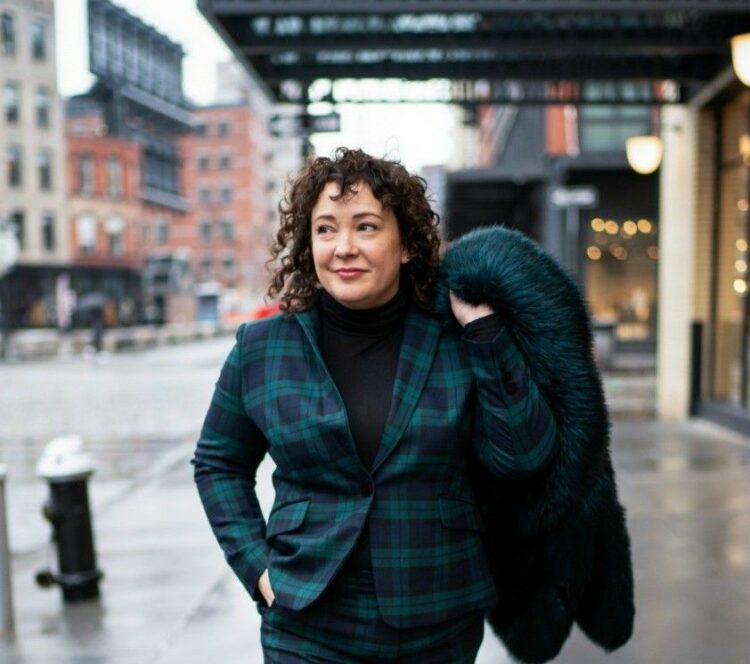
I stopped working for Limited Brands/L Brands/Bath & Body Works in 2001, but it will forever be imprinted on me. My time there is why I got into personal styling and why I began Wardrobe Oxygen in 2005.
How To Research What You Learned on Social Media
Social media is a good place to learn about current events, but it's not where you necessarily get accuracy or even the truth. Content creators make money by views and engagement; the more attention-grabbing, the bigger the paycheck. The Epstein Files is far too much for the everyday person to go through, but there are very reliable news sources out there that have done the digging for us. I am no expert, but this is what I did for this article:
1. Take the info, and put it into a search engine
I found this information by going to a search engine, putting in the statement I heard on social media into a search engine. If you put -AI after your query, you are less likely to get the AI summary, which cannot be trusted, especially with so much sensationalism content about the files.
2. Go first to well-known publications for well-researched articles
Then, head FIRST to well-known publications. While we are known to go straight to the well-known newspapers, don't discount places like Vanity Fair, Rolling Stone, TBIJ, and ProPublica for places that do deeeeep dives on topics with facts to back them up.
3. If you don't have a subscription, your library does
The app Libby will let you read magazines and newspapers for free if you have a library card. I have gift links throughout this article for the publications for which I have subscriptions, and the rest at the time of publishing were open and free. However, the Libby app can help you, while also offering a great alternative to Kindle and Audible.
3. Take snippets back to the search engine
Is a name mentioned, or a company? Go back to your search engine and at this point, generalized sites like Wikipedia can be beneficial. I also found a lot of information on company websites and in obituaries. I do not trust Reddit and other message boards for facts; those should be categorized with social media as a place to get an idea, but then do some homework to go further.
4. Go back to the inaccuracies and share facts.
That video may have hundreds of thousands of views, but that doesn't mean you don't have power. Go into the comments and simply and clearly share the truth about the situation. Folks go to the comments for more information, and they may see your comment, heart it, and bring it higher up in the feed. Do this in real life, as well. When you have facts to back you up, you can more easily dispel rumors.
In Summary…
I will not tell you what to do or think. But I do implore you not to just take a social media video or discussion on a message board as gospel. I saw videos of folks boycotting Lane Bryant because it was owned by Wexner, and that Epstein created Limited Too to groom children, and I knew I had to do this research and share it with you. Accepting sensationalism as fact reduces the severity of what has been exposed. When we focus on facts and only choose to share that, we can better fight for justice.

Alison Gary
Alison Gary is the founder of Wardrobe Oxygen, a fashion and lifestyle destination she established in 2005 to deliver honest, practical style advice for women over 40. Drawing on her background as a personal stylist, personal shopper, and apparel merchandiser, she has written for The Washington Post and Redbook and has been featured in The New York Times, the Today Show, and MSNBC. Follow Alison on Instagram and Substack.
Did you like what you just read?
Consider tapping here to buy me a coffee in thanks. The best gift you can give a content creator is the gift of sharing. Consider sharing this article on Facebook or Pinterest. Thank you so much for your support!


This just gave me the creeps. It is hard to know the truth, but what I do know is my youngest daughter LOVED that place in the early 2000s. It made me horribly uncomfortable. It just felt like they were pimping little girls. Even they saying on the tees were suggestive.
Thank you for taking on this project and sharing your findings. The way “facts” fly around social media, and the internet in general, is disturbing (especially as we head into the 2026 election cycle). I really appreciate your commitment to uncovering actual facts and explaining how you researched them.
Another librarian applauding your research techniques! Bravo!
Thank you for doing this work, Ally. Very illuminating and clarifying.
Thank you for the diligent research and excellent information! Not only did you provide valuable and insightful personal perspectives on how the brands evolved, you provided a balanced look at a difficult subject. You also captured the old mall culture so well that it took me right back to my Jams and Outback Red days. Thank you for all your hard work! This is why I love WO.
Thank you! Great job researching !
Thank you Alison, content like this is one of the reasons I have remained a regular reader for 20 years <3 You are authentic and thorough and have great style and a compelling voice.
Another useful tip for avoiding AI-generated answers when using Google. Run your search as you normally would and get to the results page, but before you dive into the results, look at the gray terms right under the search bar (it starts with AI Mode, All, Short Videos, Images, etc.). Click on “Web” (it may be nested under the “More” menu option), and it will only serve you results that are posted somewhere on the internet. You can then evaluate whether the sources are trustworthy, but you know you are only seeing web results and not AI-generated pseudo-answers. (Now people may post AI-generated info on a web page! But that’s why you need to evaluate the sources. This is just a way to be certain that you are searching the web for info, and that AI is not answering your search query directly by itself.)
Thank you for doing this—and I especially respect your comments about Internet research. I support requiring a media literacy course in American middle and/or high schools; we need critical thinking! You are so thoughtful about style, politics, feminism, social change!
As a librarian, I appreciate the due diligence/research you have done and your exhortation for your readers to follow up social media posts with their own research and not simply “share” or repeat. I especially appreciate the shout-out for Libby as a fantastic alternative to other commercial resources.
Thank you for all you do.
I was a manager at The Limited starting in 1983 which was even before the introduction of Forenza sweaters! You did a great job outlining the history of Les Wexner and the brands. Thank you!
Thank you Allison, not only for the clarity of this history but more importantly for the, ways to research this confusing history.
I also read this on FB but I was knocked off 3 times so am glad to read this on email.
I’m a Greenbelt neighbor and while no one would call me a fashionable dresser, I find so many of your posts incredibly informative and useful.
Facebook has been really awful lately with external links. I don’t know why, but I find if you click to open in browser before the link fully loads, it won’t break like it does in the Facebook browser.
This is so valuable. I will use it as an example of how to exercise good judgement. Thank you.
Thank you for this information Alison. I appreciate the research you’ve done to bring it to us.
Thank you for this detailed analysis and, importantly, sharing your methodology. Knowing how to critically analyze data is crucial and providing tips on how to do this is very helpful.
Excellent job! Thanks for supporting information literacy.
Thank you for doing in depth research on this. It’s so hard to know what to believe and I trust your thoughts on this.
Speechless.
We had a Justice store in the ‘higher end’ shopping plaza with Banana Republic, Chicos, Whole Foods, etc.
My daughter was little and I was shopping at the Carter’s several stores down the plaza. Justice store was relocated to our mall. My daughter turned eight, and wanted clothes from Justice. I wasn’t completely on board, but my husband and I brought her to the mall. The clothes had an ‘edgy cute’ style, including short ‘gothy’ plaid skirts, and cropped tops. We reeled her in a bit and told her we would buy her the skirt to wear over leggings, and a pink ‘flippy sequined’ off the shoulder sweatshirt, would need a tank underneath. She was EIGHT.
I LOVE fashion. And a 44 year old first time mom of boy girl twins. I was new at this. Cut to two years ago. ‘Tween’ swimsuits….?? Target sold/sells either a Cat and Jack color block one piece, or A juniors’ cheeky bikini-with a cherry motif. At 13, she says she only wanted the ones ‘with the strings’.
I’m sitting here feeling a bit nauseous. I don’t have anything else to say.
Sooo many people won’t bother to stop and check facts before repeating something – it’s been a problem probably since the first humans tried manipulating one another, but I would’ve hoped the internet would have improved fact-checking instead of somehow letting manipulation run away with society.
Thanks for doing the research and summarizing it so well.
Thank you
Thank you for doing the research. I’m sure it took you many hours. In these dark days it’s important to have the facts
Alison, thank for this post and all of the research you have done. These are dark days, to say the least, and it is important to get facts.
Gosh, I remember my blue and green stirrup pants from The Limited that were wardrobe staples back in the day. Your friendly neighborhood librarian gives you an A+ on this research. I had been wondering how all this fit together.
I came here to say the same thing! What a great research job!
Thank you Annette. That means a lot, especially coming from you!